
Case study
"This is amazing. I've never seen anything like it." Regenerative farmer and advisor Clare Hill on seeing her farm through EcoIntel's eyes
How Clare Hill's Planton Court Farm rose from Land Health Level 5 to Level 6 on EcoIntel's score, with eight years of satellite evidence behind the change.
- Farm
- Planton Court Farm
- Where
- Coreley, near Ludlow, Shropshire
- Size
- 32.5 ha, 13 fields
- Land Health Score
- 6.2 Recovering
- Trajectory
- Regenerating
Farm detail: enterprises, land cover, schemesHide farm detail
- Farms
- Pasture-raised beef under planned grazing · Pasture-raised chicken · Organic eggs · Market garden
- Land cover
- Permanent grassland · Ancient hedgerow oaks · Traditional cider orchard · Wood pasture · Food forest
- Schemes & certifications
- Pasture for Life · OF&G Organic · Savory Institute's EOV
Clare Hill is an experienced regenerative farmer and sustainability professional. She is the co-founder of Planton Court Farm in Shropshire, of Roots to Regeneration and of Impeckable Poultry. She knows a thing or two about land health, and what makes it possible for someone to go from feeling inspired about regeneration to transforming their farm operation to regenerative farming.
In her work as regenerative transition coach and advisor, Clare frequently encounters the problem that the principles make sense in the coaching and advisory situation but the translation into practice often is delayed or does not happen. Applying the new thinking whilst operating a farm comes with many challenges including gathering relevant information, mapping, discriminating priorities, and making a viable plan.
“The problem is not that people aren’t inspired by regeneration. I see the spark in so many farmers’ eyes. The problem is the overwhelming task of translating the new knowledge into your own context back on the farm. There’s just so much to take into account. So much information to gather. Most farmers just don’t have the time and they are driven by operations that seem to work until they don’t. Also, working with mapping tools is a whole new universe as well.”
Beyond applying a set of practices that have worked elsewhere, farming regeneratively requires an understanding of the unique ways in which land form, weather patterns, and land management possibilities come together on a particular piece of land. This, for short, is known as the context which has to be the starting point for any approach that seeks to actually achieve measurably regenerative outcomes. Importantly, this needs to include running a viable operation.
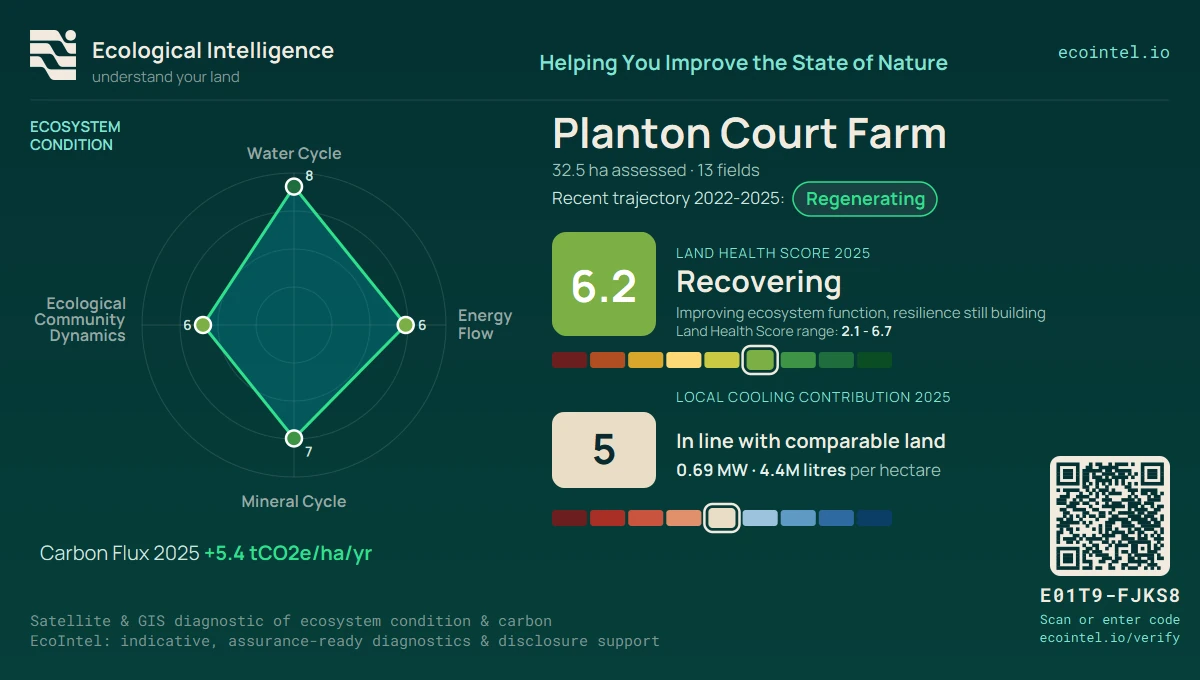
When we first ran our assessment on Planton Court Farm and Clare saw her land through EcoIntel’s eyes for the first time, she had a big smile on her face:
“Well, that’s amazing. I’ve never seen anything like it. I’ve not seen that in any other dashboard. This is the thing: you can get lots of little bits here and there but not all in one place.”
Even for an experienced advisor and coach, gathering the pieces into a coherent picture takes time and this is a major bottleneck in the transition to regenerative agriculture.
Who is Clare Hill?
Clare came to farming from the other end of the food system. More than twenty years across the agri-food world, at policy and at corporate level, working on animal welfare, sustainability and supply chains for some of the largest food businesses in the country. She then led the transition of a 1,200 acre farm from organic to regenerative production, work that took it to the Savory Institute’s Ecological Outcome Verification (EOV) in 2020. She has advised international food and retail businesses on their own regenerative programmes.
In 2021 she took on Planton Court Farm at Coreley, near Ludlow as a co-founder, bringing her knowledge to bear on it.
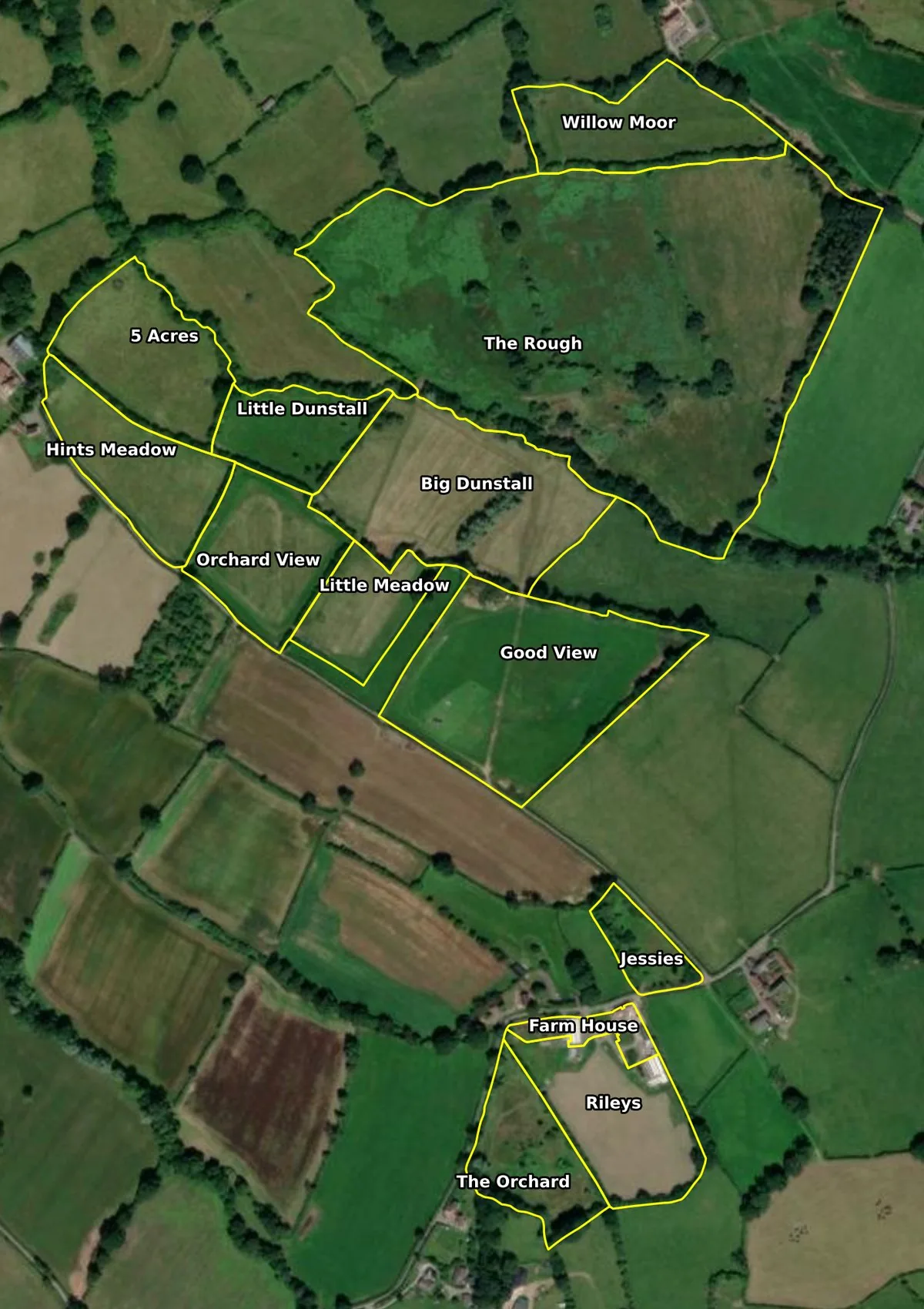
Planton Court Farm is 32.5 hectares across 13 fields, at between 186 and 243 metres of altitude, gently rolling and mostly south-facing. Permanent grassland, ancient hedgerow oaks, a traditional cider orchard, wood pasture and a food forest. She runs pasture-raised beef under planned grazing, pasture-raised chicken, organic eggs and a market garden. The farm is certified by Pasture for Life and OF&G Organic, and it has been assessed as regenerating across four consecutive seasons of EOV.
Planton Court Farm is also a teaching farm. Clare runs workshops, mentoring and farm tours from it, and with Caroline Grindrod she runs Roots to Regeneration, a successful two-year regenerative transition programme with dozens of happy alumni. Half of the Roots to Regeneration trainees are landholders with the other half professionals in food, farming and finance who influence land but don’t own it.
We can’t recommend the Roots to Regeneration programme highly enough. Follow this link to find out more and sign up.
How does EcoIntel, the Land Health System, assess a farm?
EcoIntel’s Land Health System is simple to use and doesn’t require much to get going. In England, entering the SBI number plus a few basic details about the farm management approach and tenure is enough to set the cogs whirring. After a few hours of processing, the platform returns a wealth of information organised into assessments (including risk, opportunity, sustainability), diagnostics (four successive layers from context through water cycle to living systems and carbon/productivity), actionable insights, and reports including sustainability and ESG impact disclosure reporting.
“The burning question for me has always been how, with limited time being the bottleneck for me and my clients, how do you help people fast-track their progress? How do you get them information that is really relevant to them? This whole idea underneath of EcoIntel to be a complete digital twin of land health, not just of land form makes complete sense.”
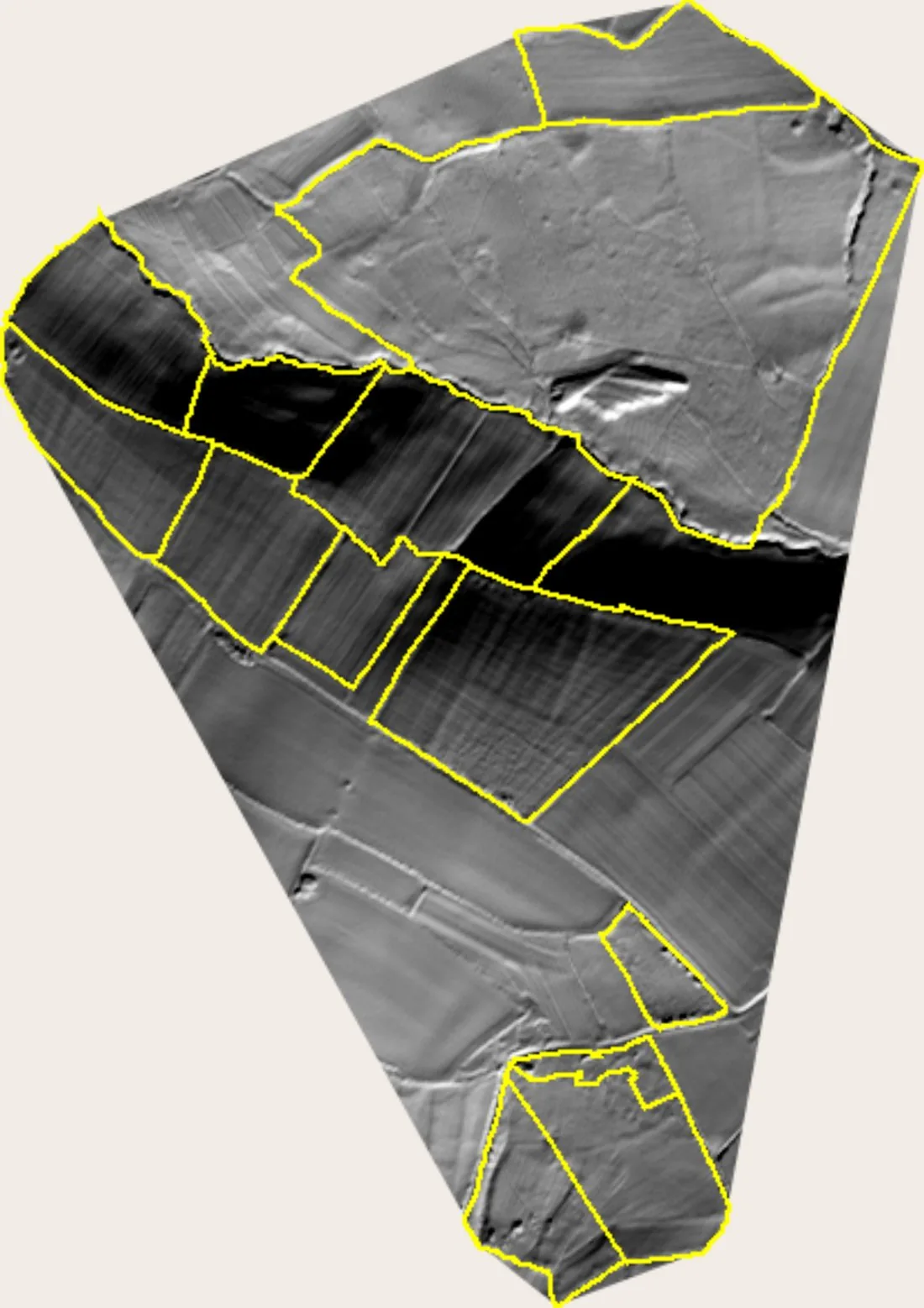
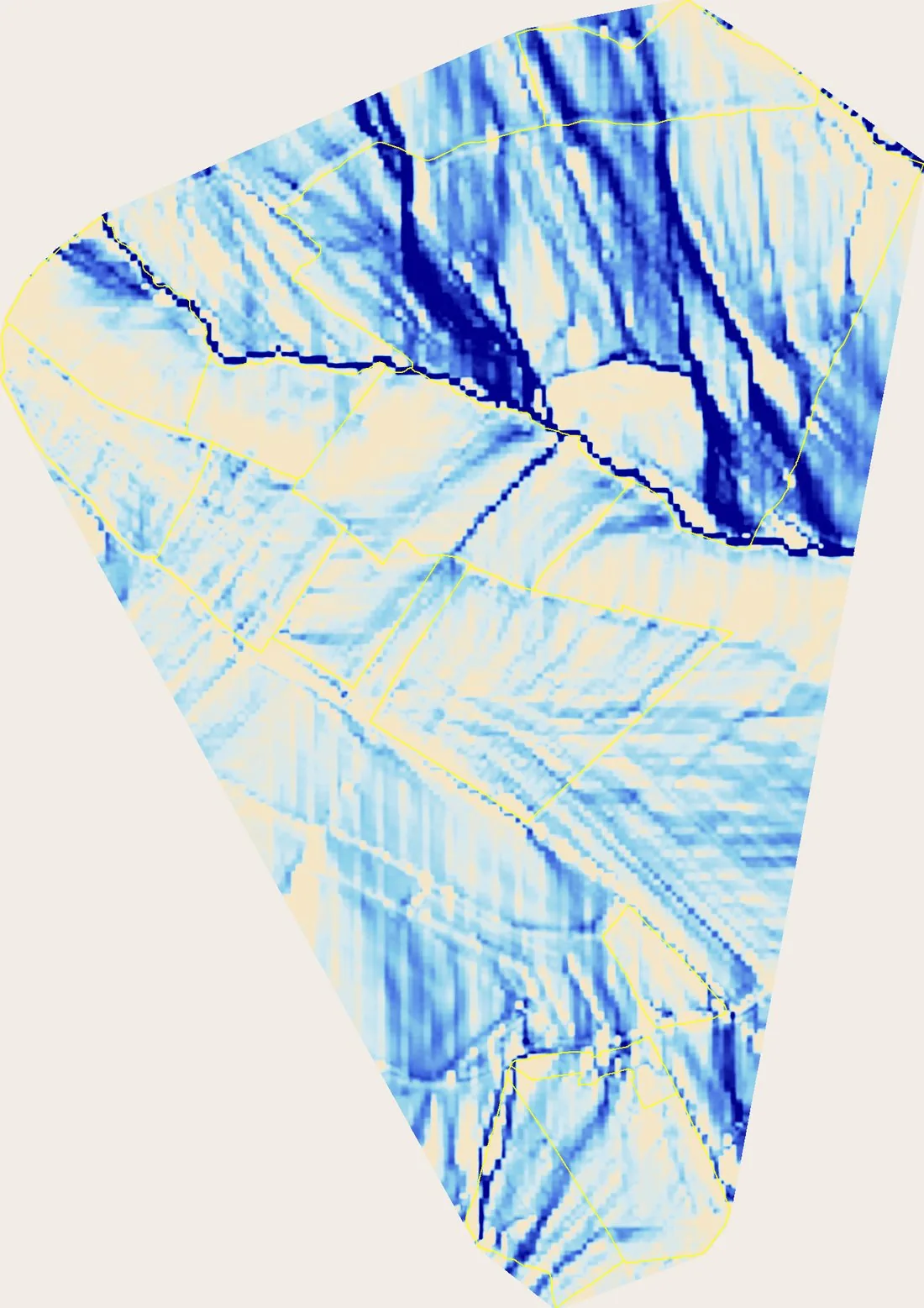
EcoIntel takes on the research and information gathering work by using a vast number of data points taken from satellite- and GIS-data, elevation and land-shape models plus daily weather and climate assessments and more which are all resolved into one coherent diagnostic going back to 2018.
Clare puts it this way:
“There’s a really delicate balance to get right. It’s so overwhelming when you start with the regenerative transition. You want to make sure that your work and thinking time go straight into deciding what to address and whittle things down into a plan. EcoIntel gets a difficult balance right. It gives you the eyes to see the land and start making informed decisions. You go from overwhelm to understanding.”
What is the Land Health Score, and what does Level 6 mean?
The Land Health Score is EcoIntel’s own measure and the heart of the system. It places any piece of land on one scale, from 1, Collapsed, to 9, Flourishing, and it judges that land against what is possible in its own ecoregion rather than against a national average or a universal ideal. A hill farm is measured against what that hill could be. Because we read the satellite record back to 2018, the score is tracked through time rather than taken as a snapshot, so it gives a direction as well as a position.
When Clare took the farm on it was scoring in Level 5, Transitional. It has since moved up into Level 6, and across the whole eight-year record its trajectory reads as Regenerating. A single good season would not do that. A band change on an eight-year record is evidence of regeneration in progress, and it is exactly the evidence that has been hardest for a farmer to put their hands on.
The nine bands of EcoIntel’s Land Health Score, and what each one means:
| Score | Band | What it means |
|---|---|---|
| 9 | Flourishing | Ecosystem at fullest expression. Strengthens under disturbance. |
| 8 | Thriving | All processes highly active. Strong biological diversity and vitality. |
| 7 | Healthy | All core processes functioning well. Minor vulnerabilities only. |
| 6 | Recovering | Measurable improvement underway. Trajectory clearly positive. Planton Court Farm sits here. |
| 5 | Transitional | Some processes functioning, others compromised. Trend unstable. |
| 4 | Stressed | Multiple processes impaired. System under significant strain. |
| 3 | Degraded | Most processes failing. Structural damage evident. Urgent action needed. |
| 2 | Depleted | Severe dysfunction across systems. Biological capital critically low. |
| 1 | Collapsed | System failure. Bare soil dominant, minimal vegetation or function. |
This is what the system tells any land manager that Level 6 means:
“The land is in active recovery. Water, energy and minerals are doing real work, and the diversity is catching up. This band is where committed regenerative management starts to compound, the foundations are in place and the next step is to deepen them.”
Underneath the headline the picture is specific, and it is a good one. The water cycle is the strongest of the four processes at Level 8, Thriving: rain that falls on the farm soaks in and stays, which is why the grass kept going through 2025, the driest growing season in the eight-year record. Mineral cycle reads Level 7, Healthy, and energy flow Level 6, Recovering. The EcoIntel assessment indicates that the farm is a carbon sink, banking carbon into soil and roots year on year, about 5.4 tonnes of CO2e per hectare per year, rather than losing it. And the bottleneck is the diversity of the sward: community dynamics is the limiting process at Level 6, the lowest of the four. The grass is productive and the foundation species are in place, but the wider range of plants that carries a pasture through a hard year has not caught up with it yet.
One constraint, clearly named, on a farm that has already got the difficult part right. And the remedy is already standing in two of Clare’s own fields: The Orchard and Jessies, under ancient hedgerow oaks and old orchard trees, carry the richest plant communities and the ripest seed banks on the farm.
That is what having the eyes to see the land means in practice. EcoIntel does not do the walking. It tells you which gate to climb over, and what question to take with you.
Frequently asked
What did EcoIntel find at Planton Court Farm?
At the highest level: a Land Health Score of 6.2 Recovering on the 1 to 9 scale, up from Level 5, Transitional, when Clare Hill took on the farm. The trajectory across the 2018 to 2025 satellite record reads as Regenerating. The water cycle is the strongest of the four ecosystem processes at 8.2 Thriving, and the limiting process is Ecological Community Dynamics, the diversity of the sward, at 6.4 Recovering.
Why did Planton Court Farm's score rise in a drought year?
2025 was the hardest growing season in the farm's eight-full-year record, with 280 mm of rain through the growing months and nineteen weeks under real stress. The Land Health Score went up rather than down. Rain that falls on the farm soaks in and stays, which is what kept the grass going, and it is the clearest evidence that the water and soil foundations built since 2021 are holding.
Does EcoIntel replace walking the land or soil testing?
No. It provides rich contextual research, assessments and diagnostics which enable a farmer or advisor to put other measurements into ecological context. This improves decision making capacity enormously. Of course, Clare Hill still walks her fields; but what she sees has a wider and more detailed interconnected context.
What does an advisor get out of it that a farmer does not?
Clare Hill uses EcoIntel, the Land Health System, across three settings: her own farm, the Roots to Regeneration two-year transition programme she runs with Caroline Grindrod, and the estates she advises. In each case the value is that she has rich contextual research, assessments and diagnostics available at her finger tips that she can easily share and to which she can bring her deep experience to bear which will also inform focused and direct in-field assessments where required which in turn inform the bigger picture.
What is holding Planton Court Farm back, and what would fix it?
The limiting process is Ecological Community Dynamics, the diversity of the sward, at 6.4 Recovering against a water cycle at 8.2 Thriving, a mineral cycle at 7.4 Healthy and energy flow at 6.9 Recovering. The grass is productive and the foundation species are in place. Now, the challenge is to use the already existing diversity of species elsewhere on the farm to improve lower performing fields, for example, through livestock management strategies. EcoIntel does not proscribe solutions but offers ecologically-informed approaches.