
Concept · Glossary
Eye and Orbit
Also: eye-and-orbit
Definition
EcoIntel's framing for two scales of the same indicators: what a walker sees on the ground, a satellite measures from orbit, weather-corrected.
Eye and Orbit names the relationship between two scales at which the same ecological signals can be read.
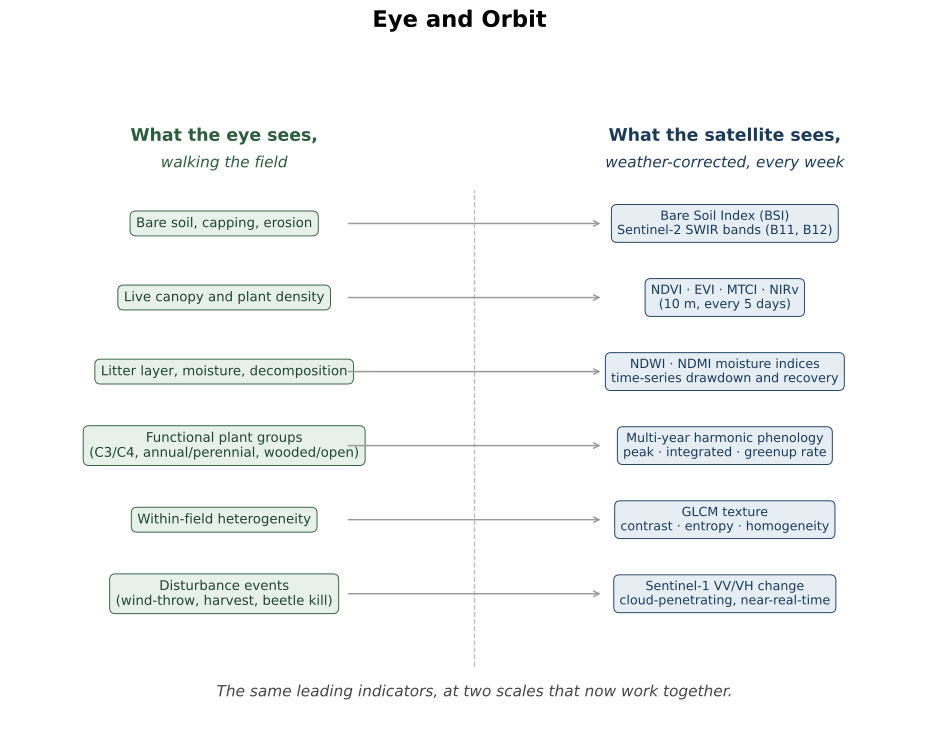
The walker brings judgement and ground-truth; the satellite brings scale and continuity. Neither replaces the other.
On the ground, an experienced walker reads leading indicators directly. They notice the bare patches, the wet corner, the green strip where the soil is alive, the brown patch where it is not. They feel the soil for porosity, look at the dung for decomposition, count the species in a square metre. The eye sees in one field in one hour what a satellite cannot: context, judgement, ground-truth.
From orbit, a satellite sees the same leading indicators at scale. Live green canopy. Bare soil. Canopy moisture. Phenological pattern. Recovery after grazing or mowing. The satellite cannot judge, but it sees every field on a property, every week, weather-corrected, going back to 2018. What the eye cannot do at scale, the satellite cannot do with judgement.
EcoIntel was designed so the two work together. The Land Health System reads the same fifteen leading indicators the experienced walker reads, measured at 10-metre hexagon resolution, weather-corrected, continuously. The satellite gives the scale and the continuity. The walker gives the ground truth. Neither replaces the other, but together they are far more than either.
This is what ecoliteracy at landscape scale looks like in 2026.