
Concept · Glossary
Comet of Life
Also: the comet
Definition
EcoIntel's metaphor for leading versus lagging indicators of ecosystem health: lagging is the long tail, leading the bright head where life happens now.
The Comet of Life is the framing EcoIntel uses to make sense of the gap between leading and lagging indicators of ecosystem health.
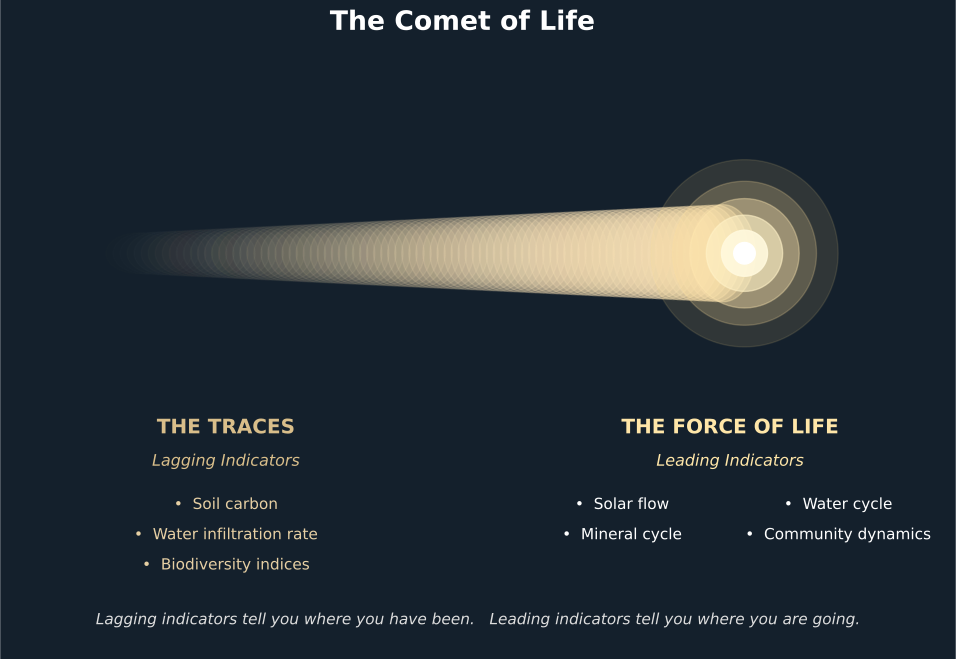
The head is where life works now, the leading indicators. The tail is what it leaves behind, the lagging indicators.
Imagine a comet. The bright head (incandescent, fast-moving, the moment of fusion happening now) is where life is doing its work: photons being captured by living tissue, water moving through soil, minerals cycling between plant and decomposer, communities shifting in response to season. The long, slow tail is the trace life leaves behind: accumulated soil carbon, biodiversity indices, infiltration capacity, the wealth of past seasons.
Lagging indicators measure the tail. Soil carbon shifts on the timescale of years and decades. Biodiversity surveys respond to management over seasons and decades. Water infiltration changes with soil structure. They are all real measures of ecological wealth, but by the time the number moves, the decisions that moved it are long behind.
Leading indicators measure the head. Live green canopy, bare soil, litter decomposition, functional plant groups, dung breakdown, recovery rate after disturbance. These respond to management on the timescale of weeks and seasons. They are visible to a walker on the ground today, and increasingly visible from orbit too.
The Comet of Life metaphor says: if you want to know whether your land is improving in time to act, watch the head, not the tail.