Deep Knowledge
From input audits to true impact: how measuring ecosystem condition moves standards on
Organic and pasture-fed audit how a farm is run, not what the land does. See how long-range condition monitoring settles whether land improved.
Updated 9 July 2026. Since I published this, Jimmy Woodrow of Pasture for Life described a funding bid turned down because the funder had decided that sheep were beyond the pale, unable to belong in a regenerative system or play any part in conservation grazing. It is the sharpest example I have seen of the problem this piece is about, so I want to put it up front. You cannot settle in the abstract whether sheep, or cattle, are good or bad for nature. The same flock improves one field and damages another, and what decides which is the management and the ground it grazes. The way to end that argument is to stop having it in principle and to measure what actually happened, on this land, over these years. That is what the rest of this piece is about.
Almost every standard we trust in farming audits the same kind of thing: how the farm is run. Organic certification checks which inputs are used and which are banned. Pasture-fed certification checks that the animals are raised on a pasture diet and that the farm follows the practice rules. A stewardship scheme checks that the options were chosen and the plan was written. These are practice standards, and independent audit is what makes them worth trusting. I am not knocking them. We need them.
But they share a blind spot. They prove how a farm is run. They do not, on their own, measure what the impact of the approach achieves. The whole value story, to a shopper, a funder, a buyer or a policymaker, rests on an assumption that the audit does not check: that farming this way genuinely improves the state of the land.
With current approaches, we cannot possibly get the right outcomes
The blind spot that we are not measuring the outcomes turns poisonous when it meets a genuine disagreement. Are sheep good or bad for nature? Is grazing livestock part of the climate problem or part of the answer? Is a given practice regenerative or just marketing?
People argue these as matters of principle, and they cannot be won that way, because the honest answer to all of them is that it depends. For animals, for example, it depends on the stocking, the timing, the recovery, the soil, the aspect, the rainfall. The same flock that can wreak havoc on a denuded hillside under set stock grazing (i.e. when they are put in a single field for an extended period) can increase the ecosystem health of a floodplain meadow under holistically planned grazing. When a funder rules a whole species in or out on principle, or a campaigner declares a practice good or bad in the abstract, they are guessing, however well informed the guess.
The way out is to stop arguing the general case and measure the real-life outcomes. The real question is narrower and answerable: what did these sheep do to this land? That question has an answer, and it is measurable.
Ecosystem condition: the measure that settles the case
The measurement that settles the argument is ecosystem condition: how well the land is functioning, scored against the healthy reference for that part of the world. It is the term the nature-disclosure frameworks have settled on (and we explain it in more detail in a separate post). The short version is that you can measure ecosystem condition by assessing four ecosystem processes from satellite, weather-correcting them, and scoring them against reference. They are how well the land cycles water, captures energy, cycles minerals, and holds a diverse community of life.
Armed with this analysis, assessment of the ecological impact of animals on a specific place becomes immediately visible. And in the EcoIntel system, a field gets more than a pass or a fail. It is scored, process by process, against where healthy land of its type should sit.
Reading a grazing farm, in context, over eight years
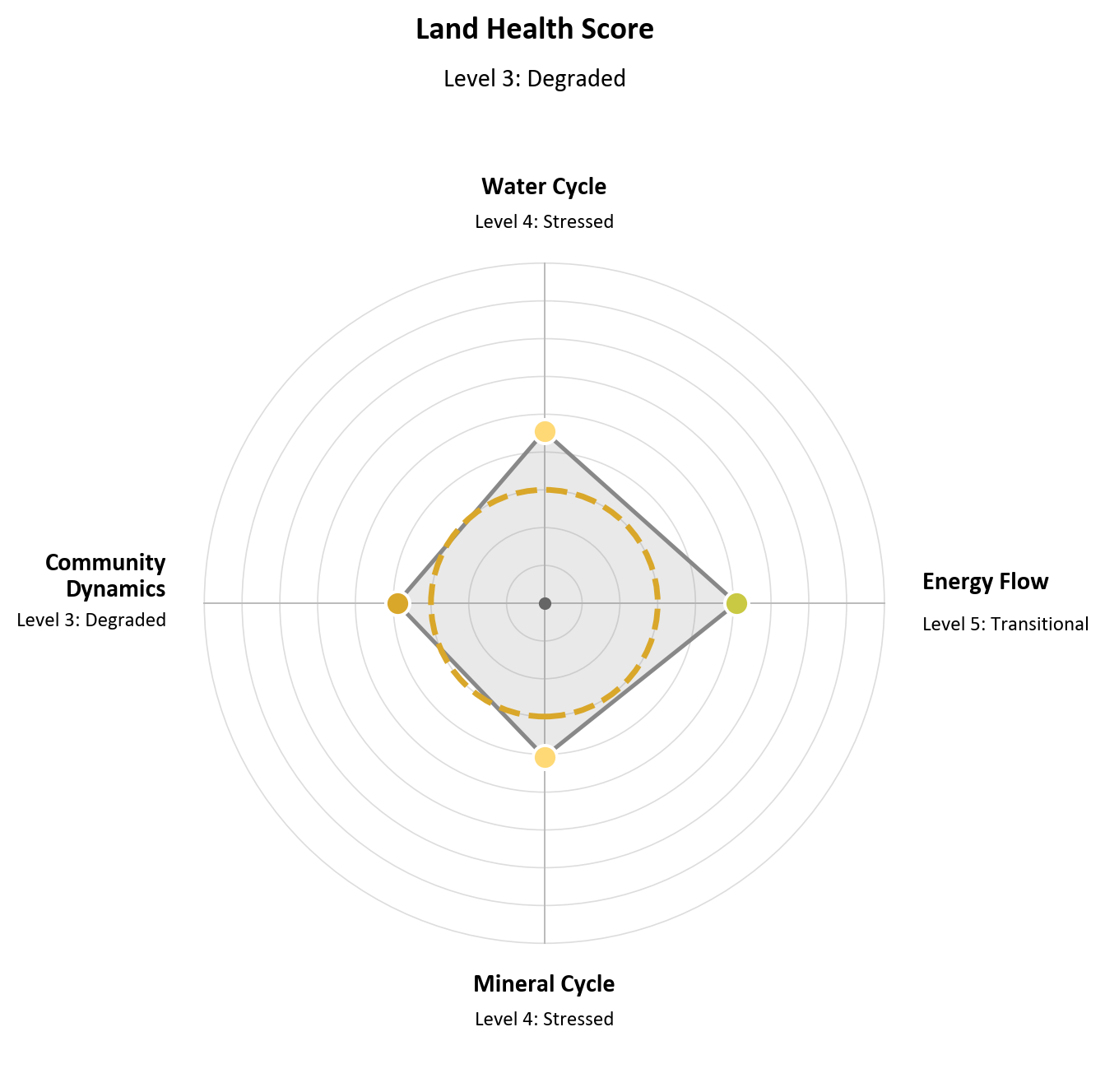
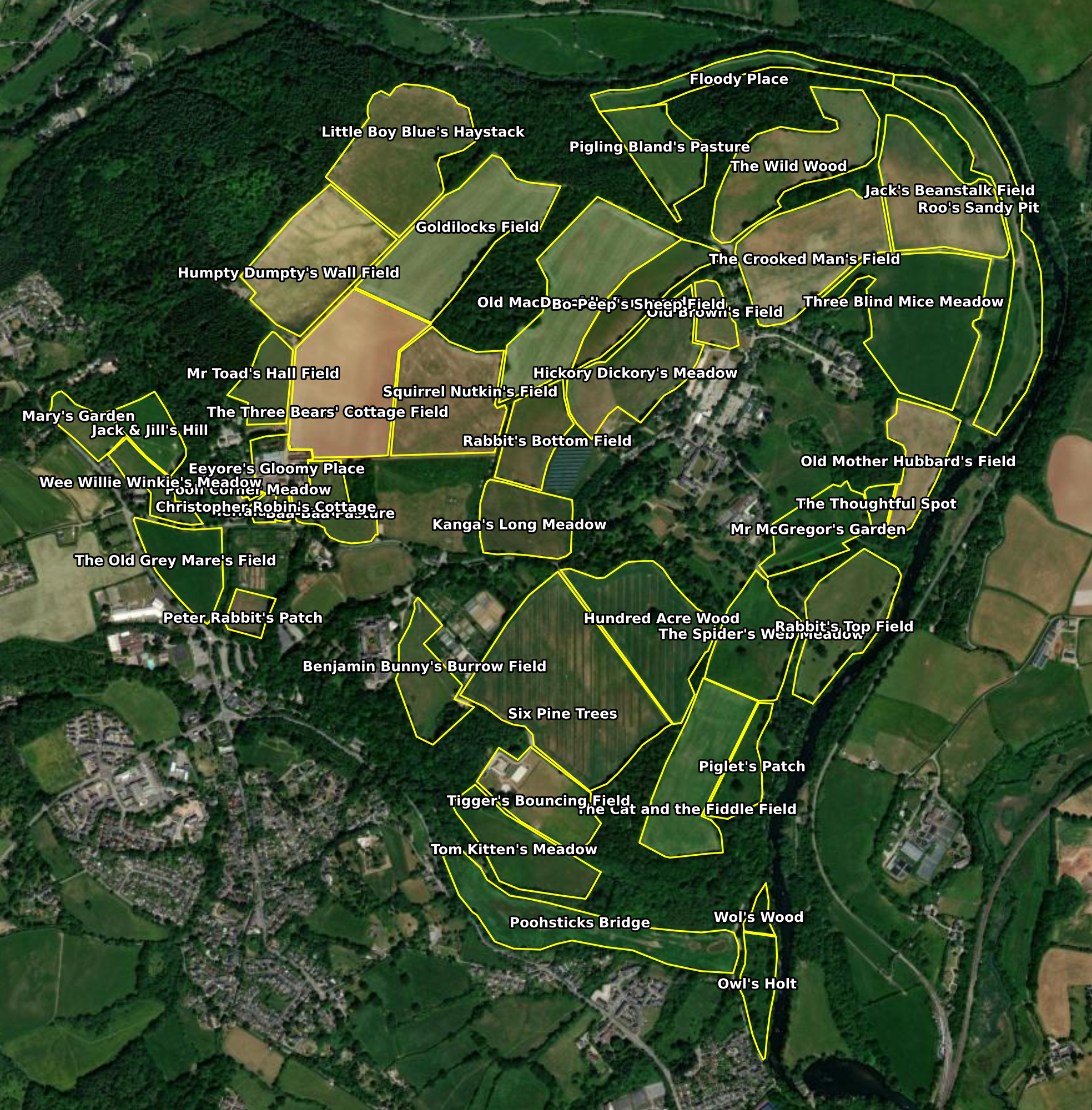
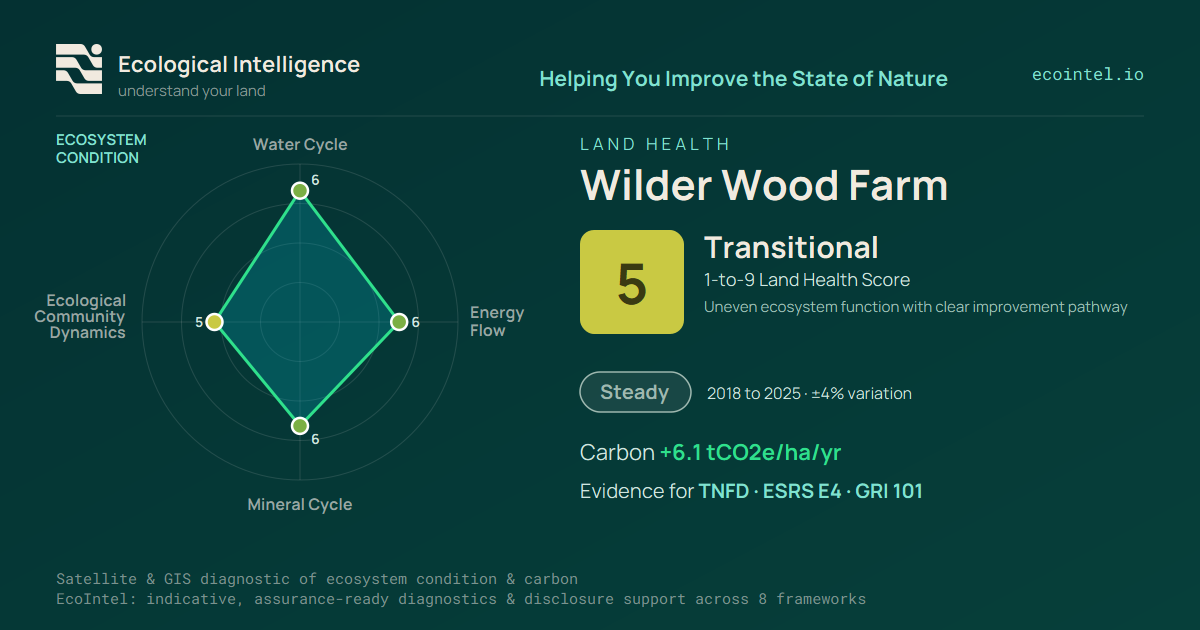
Let’s look at what that looks like on a real grazing farm over time. Wilder Wood is our 175 hectare grassland demonstration farm. We can see what has happened every year from 2018 to 2025 (as we can for any farm in the UK). Wilder Wood’s grassland sits at a Land Health Score of 5 on the scale of 1 (collapse) to 9 (flourishing). And in detail it is scoring at the top end of the transitional band, and overall its trajectory is one of improvement despite the drought of 2020. That is what genuine regeneration looks like in the data.
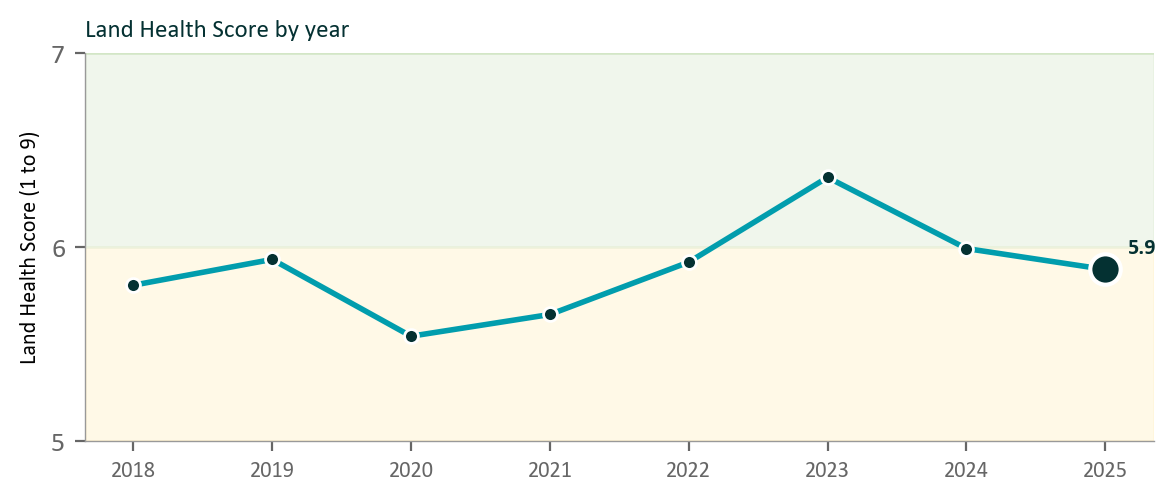
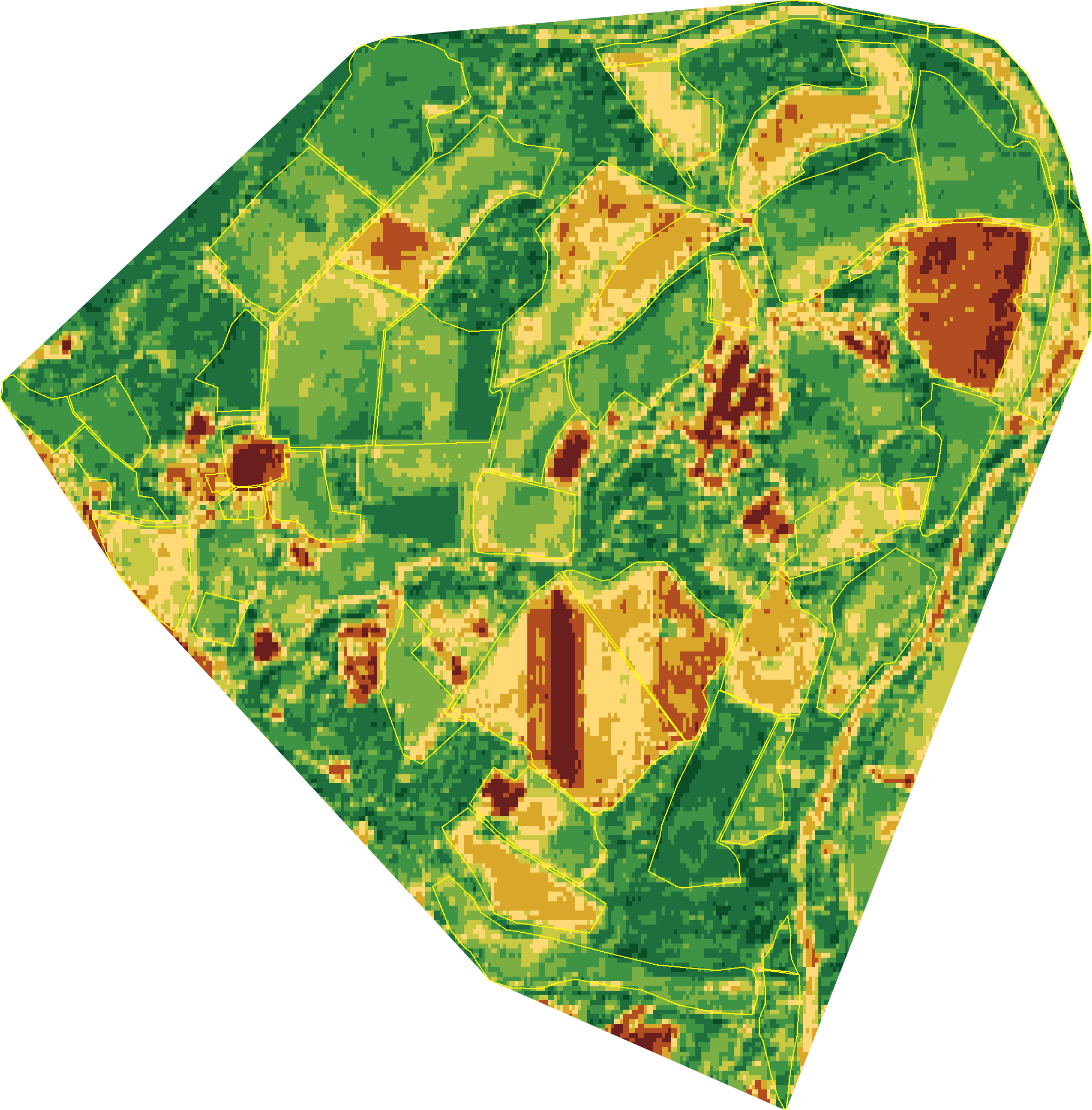
On Wilder Wood farm, the water and mineral cycles are working well, and the diversity of the sward is the weakest element determining overall ecosystem health. The fix the EcoIntel report recommends does not start with a seed order. It starts with rest: longer recovery periods on the weaker fields, grazing by leaf stage instead of the calendar, and moving the genetics already on site by cutting hay from the diverse fields and feeding it to animals spread out on the poorer ones, where it will be consumed and the seed bed transferred by dung and trampling. That advice is derived from an impact measure doing what a practice audit cannot: telling this farmer what these animals have done to this ground, and what to change.
Every field, every season, at a cost that is affordable
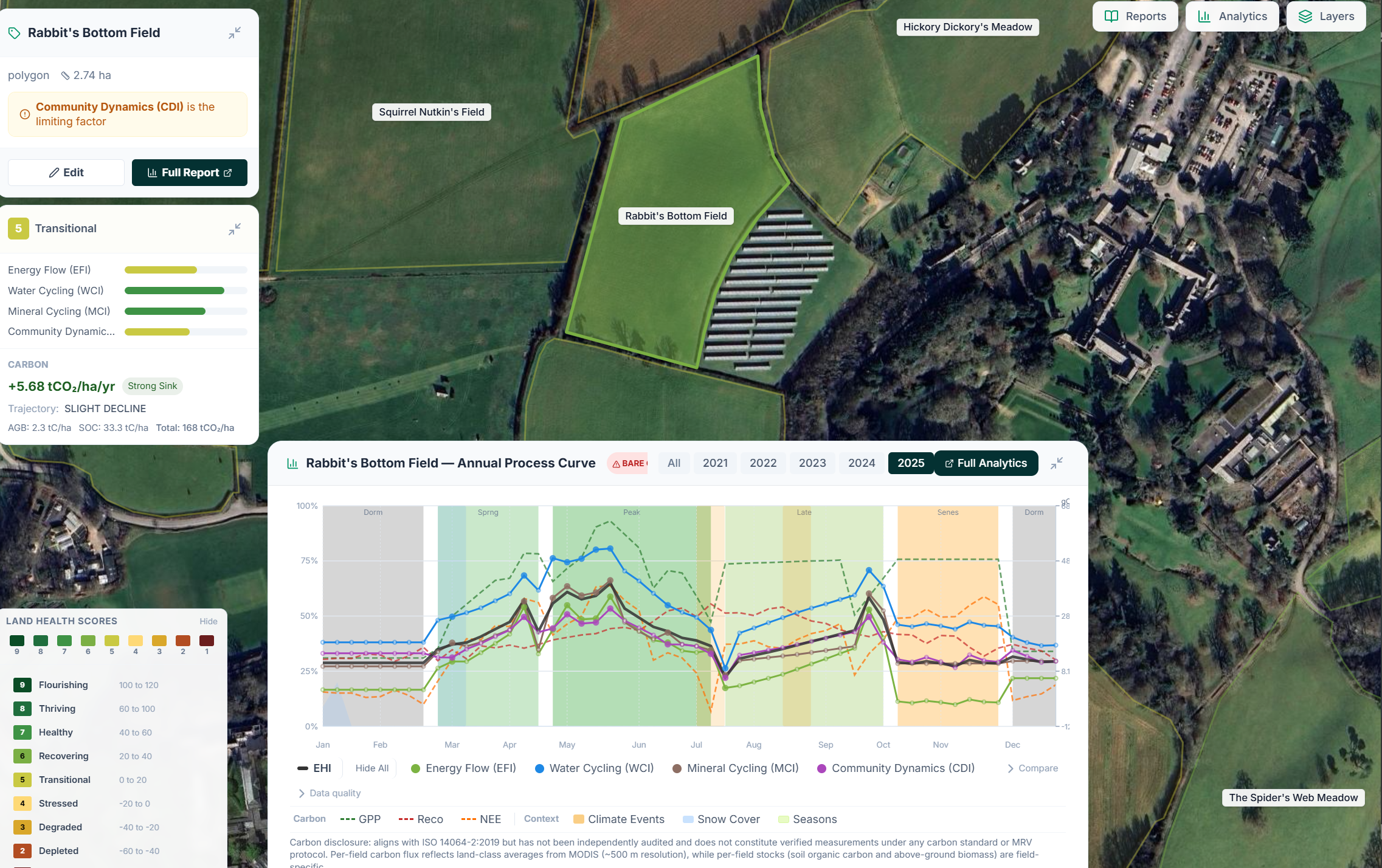
The reason this approach of assessing outcomes has not happened already is cost. Reading ecosystem condition properly used to mean a trained ecologist walking the ground. That is unaffordably expensive to do at scale. A membership body or a certification scheme can only afford it on a handful of farms, not on all of them. The flagship science behind one grazing standard reached a few dozen farms out of nearly two thousand members. The result is that we have generally resorted to practice-based systems even when we know that this does not drive the right outcomes.
A satellite-based assessment changes the unit cost of evidence. It covers every member in a scheme, every field and every season. It does it from public data, for the price of software instead of fieldwork. The on-the-ground fieldwork is not replaced. Instead it can then be deployed in a few well-chosen places where it is really needed. Together, the satellite system and the person on the ground help each other get better results. That is how a whole movement, not a lucky sample of it, gets an evidence base.
Bigger than any one label
This is not about one standard. Organic, pasture-fed, regenerative, LEAF (and the supply-chain and finance disclosure world beyond them) are all reaching for the same thing: evidence that the land is genuinely improving. Ecosystem condition is the shared measure that can carry that evidence, because it maps onto the language the disclosure frameworks now use, TNFD and ESRS E4 for nature, and it reads the same way whatever badge is on the gate.
So a certifier can offer its members outcome evidence alongside the audited mark. A buyer can ask a supplier for evidence of whether the land is improving (called a condition trajectory) as well as a certificate of current performance. A funder deciding whether to back a flock of sheep can ask what those sheep did to that land, and get an answer.
The line that must not move
One discipline holds all of this together. The impact assessment sits beside the audited standard and never becomes its pass or fail. The certification confirms whether the practice is the right one; the ecosystem-condition assessment shows the outcome.
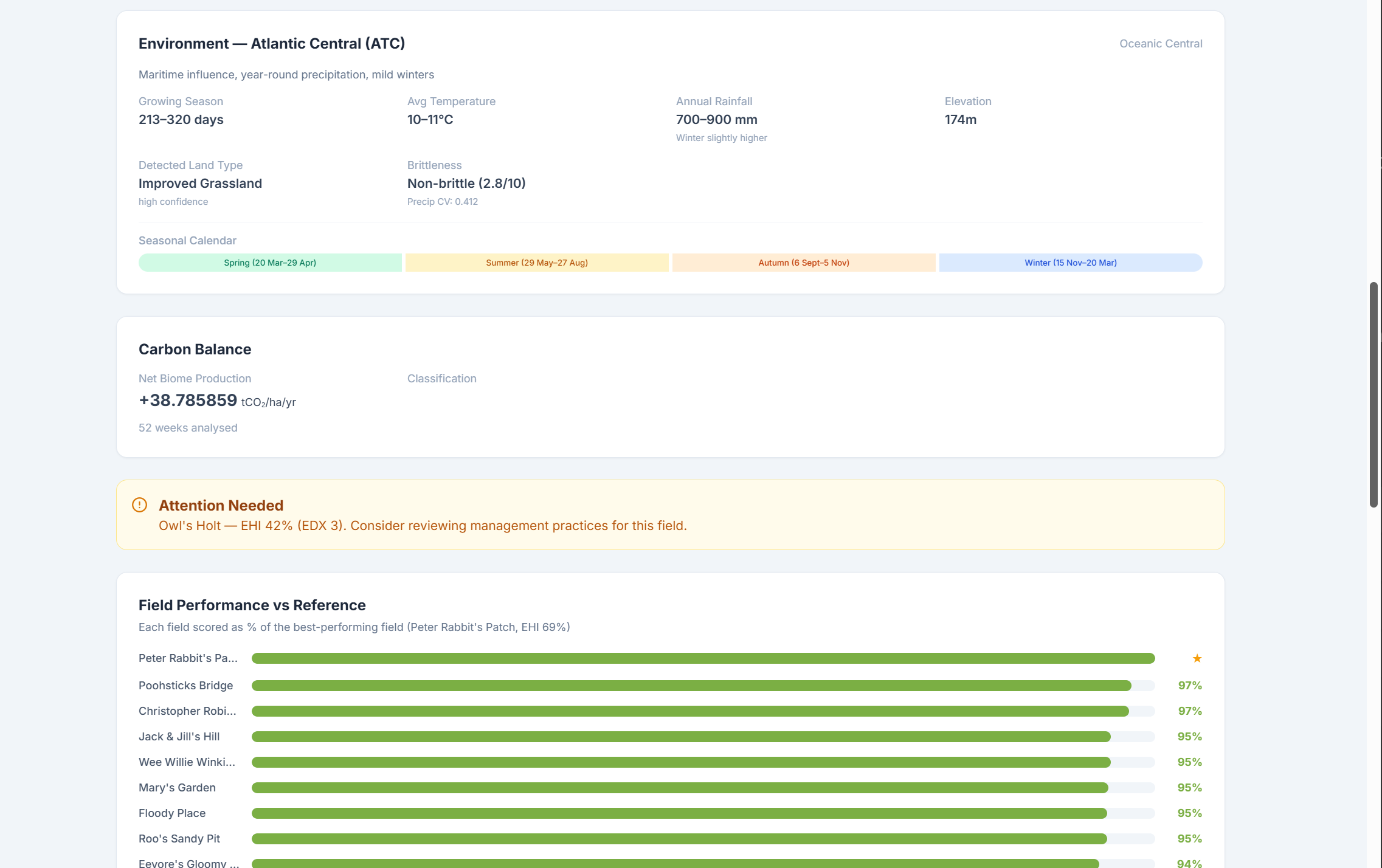
In the EcoIntel system we are careful to work only with what we can stand behind. The ecosystem-condition and carbon assessments are indicative, satellite-derived decision-support and disclosure evidence. They are not a certification, not an audited compliance product, and not a credit you can sell or offset with. A satellite cannot name the species in a sward, measure soil carbon at depth or count the insects, and we say so. What it can do, that a field survey cannot, is cover every field, every year, and hold them all to the same standard.
Ask the land
Which brings me back to the sheep. When a funder decides they are beyond the pale, or a farmer swears they are the answer, both are arguing a case that cannot be won on principle. The outcome on the land is where both need to look to settle the matter. Measure the ecosystem condition where the animals graze, read it over years, correct it for the weather, and you have the one thing the argument has been missing: evidence of what actually happened, in this place, under this management.
That is the move worth making by everyone involved: from auditing how a farm is run to measuring what is happening. The standards that add ecosystem health to their mark will be the ones that can look a funder, a buyer or a sceptic in the eye and show them the trajectory. Give the sheep a chance, and then ask whether it actually worked.
Frequently asked
What is the difference between a practice standard and an impact measure?
A practice standard audits how a farm is run: which inputs are used or banned, how the animals are fed, what a management plan contains. Organic and pasture-fed certifications are practice standards, and independent audit makes them trustworthy. An impact measure asks a different question: did the land actually improve? Ecosystem condition is an impact measure. It reads whether the land is functioning, on a grid, over years, so you can see the result of the practice rather than only confirming the practice happened.
Can you prove whether livestock help or harm a particular piece of land?
Not in the abstract, and that is the point. The same flock or herd improves one field and damages another, depending on how it is managed and the ground it grazes. You cannot settle it as a matter of principle. You can settle it for a specific farm by measuring the condition of that land, under that management, over several years. Long-range monitoring shows whether the trajectory went up or down, which ends the argument for that case.
Does ecosystem condition monitoring replace organic or pasture-fed certification?
No. It sits beside the audited standard and never becomes its pass or fail. The certification proves the practice; the condition read shows the outcome. The two are complementary, and keeping them separate is what protects the credibility of the audited mark. The read is indicative decision-support and disclosure evidence, not a certification and not an accredited MRV.
How can a membership body or a scheme afford to measure every farm?
Because a satellite read costs a fraction of a field survey. Field sampling is rigorous but slow, small and expensive, so a scheme on a membership budget can only ever measure a handful of farms. Reading ecosystem condition from satellite changes the unit cost of evidence, so the whole membership can be covered, every field, every season, while the field science still goes deep in a few places.